The Long Council
Who was selected, and why
Will China become the new hegemon power and will it replace the role of the United States over the next decades?
The central tension
The core analytical conflict is between those who see China's rise as inevitable displacement of US hegemony versus those who see structural obstacles to Chinese global dominance and potential for managed coexistence.
Selected members
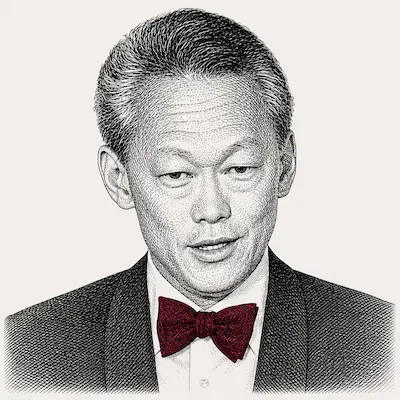
Lee Kuan Yew
Will argue: China's rise is inevitable but need not mean US displacement; both powers must avoid the Thucydides Trap through managed accommodation.
LKY spent decades analyzing US-China relations and developed the most sophisticated framework for understanding China's rise from a small state perspective.
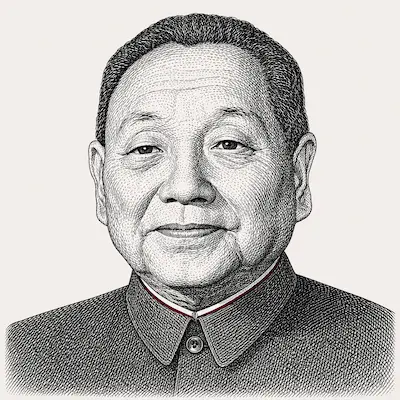
Deng Xiaoping
Will argue: China must focus on domestic development for decades before asserting global leadership; premature hegemonic ambition would be strategically premature.
As architect of China's reform era, he established the strategic doctrine and institutional framework that enabled China's rise while maintaining the "hide and bide" approach.
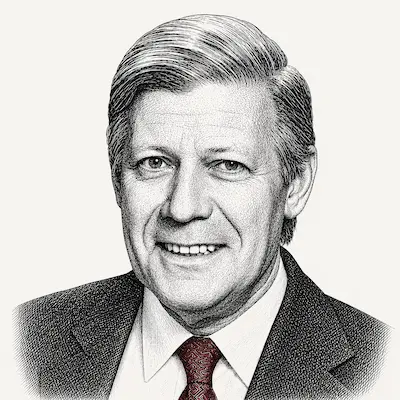
Helmut Schmidt
Will argue: Hegemonic transitions create dangerous instability; institutional frameworks and alliance structures matter more than bilateral power balances.
Schmidt governed during the Cold War transition period and developed sophisticated analysis of great power relationships, alliance management, and the dynamics of hegemonic competition.
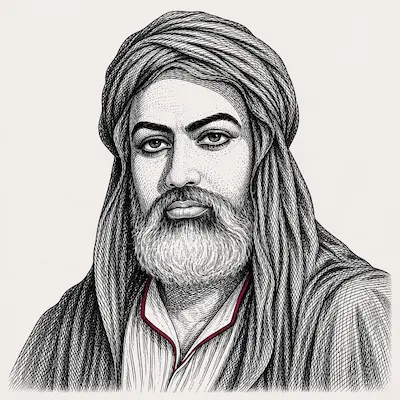
Ibn Khaldun
Will argue: Hegemonic power contains the seeds of its own decline; the US faces internal cohesion challenges while China's rise depends on maintaining unity through prosperity.
His cyclical theory of state rise and decline provides the essential framework for understanding hegemonic transitions as recurring historical patterns rather than unique events.
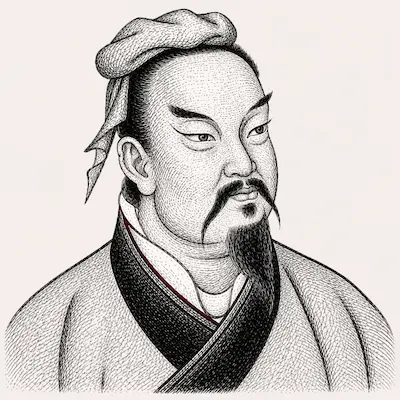
Sun Tzu
Will argue: True strategic victory means achieving objectives without direct confrontation; both powers should focus on positioning rather than direct challenge.
His framework addresses strategic competition between major powers and the conditions under which conflict can be avoided while strategic objectives are achieved.
Considered but not selected
Kissinger: (not in roster), would provide realpolitik framework for managed great power competition - Thatcher, excluded because her framework is primarily European and her documented engagement with China/US competition is limited - Roosevelt, excluded because his international order framework predates the nuclear age and Cold War dynamics that shape current great power competition