The Long Council
Who was selected, and why
Should the Netherlands cut regulations to build housing faster?
The central tension
Does cutting red tape actually unlock housing, or does it just hand developers a win while hollowing out the rules ordinary people rely on?
Where they stand
Build faster by cutting rules
 Albert O. Hirschman
 Deng Xiaoping
Rules protect the vulnerable and the commons
 Elinor Ostrom
 John Rawls
Diagnostic outsider challenging both frames
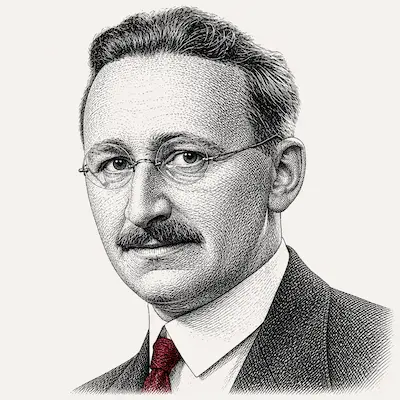 Friedrich Hayek
leans toward deregulation pole but on distinct epistemic grounds)
Selected members
Albert O. Hirschman
Will argue: Some regulatory imbalance can force productive action but warns reformers to distinguish real bottlenecks from genuine protections worth keeping.
His unbalanced growth and hiding hand ideas directly test whether deliberately removing constraints produces productive momentum or reckless bottlenecks.
Friedrich Hayek
Will argue: Local authorities cannot possess the dispersed knowledge needed to plan housing supply, so rules should be minimal and general rather than discretionary.
His knowledge problem argument is the sharpest documented case that central permitting and zoning rules reflect planners' pretence of knowledge they don't have.
Elinor Ostrom
Will argue: The question is not more or fewer rules but whether rules are designed with the people who live under them, since externally imposed deregulation can fail as badly as externally imposed control.
Housing and land use involve shared urban infrastructure and collective-action problems that neither pure deregulation nor pure centralisation reliably solves.
John Rawls
Will argue: Deregulation is only justified if it demonstrably benefits the least advantaged, such as those currently priced out of housing, not merely developers or incumbent landowners.
Deregulation to speed building raises a direct distributive justice question about who bears the costs of reduced environmental and neighbourhood protections.
Deng Xiaoping
Will argue: Pragmatic, staged deregulation that tests results in practice beats defending rules for their own sake, but reform must be sequenced, not indiscriminate.
His doctrine that ideology must yield to results and that experimental, sequenced liberalisation unlocks stalled development speaks directly to the Dutch abundance debate.
Considered but not selected
Margaret Thatcher: her deregulation and housing policy (Right to Buy) are relevant but her documented record is UK-specific and risks duplicating Hayek's epistemic argument without adding a distinct line. Helmut Schmidt, thin documented record on housing or domestic regulatory policy specifically; his strength is energy and European monetary architecture, not land use. Amartya Sen, development-as-freedom framework is powerful but housing deregulation is a narrower institutional-design question where Ostrom and Rawls already cover the distributive and local-institution angles more directly.