Should Groningen's gas fields remain open for emergency situations?
Built from documented writings, speeches, decisions and historical records. Council members argue from documented positions, applied to today's question.
Emergency capacity requires local control over when emergencies justify production.
Schmidt argues energy import dependence becomes existential vulnerability during crises like the 1973 oil embargo. Maathai counters that emergency-only operation creates permanent infrastructure for permanent temptation to restart. Ostrom proposes polycentric governance giving Groningen communities veto power over production decisions and control over emergency criteria. Hirschman warns permanent closure forecloses options that cannot be recreated when circumstances change.
The council splits on whether local control can genuinely constrain national governments during energy crises.
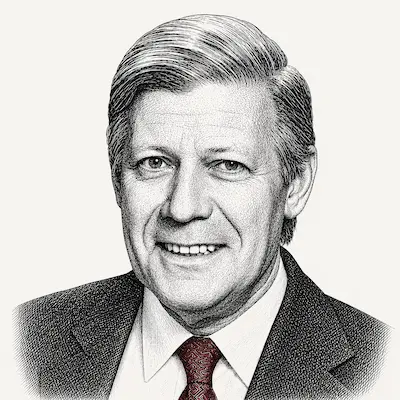
Energy reserves that cannot be activated during crisis are not reserves — they are museums.
Groningen must remain available for genuine emergencies because energy import dependency during crisis is an existential vulnerability for a small European state. In November 1973 I coordinated West Germany's response to the OPEC embargo. We introduced car-free Sundays and accelerated domestic energy diversification, but the lesson was clear: energy dependence is not an energy question but a question of sovereignty. The Dutch face the same structural reality. Russia can cut gas flows. Middle East conflicts can disrupt shipping. Domestic reserves provide the only guarantee of energy security when external suppliers become unreliable.
The seismic risks are real but manageable through engineering and compensation. The sovereignty risks of total import dependence are not manageable through any mechanism except domestic production capacity. Emergency-only operation minimises local harm while preserving the strategic option. You cannot build energy infrastructure during a crisis.

Keeping Groningen open treats local communities as sacrifice zones for national energy security.
Schmidt's sovereignty argument ignores who bears the cost and who receives the benefit. In 1989 I fought President Moi's plan to build a monument in Uhuru Park because public space belonged to the public, not to ruling elites. The same principle applies here. Groningen residents face documented earthquake damage to their homes while distant populations in Amsterdam and Rotterdam receive the energy security. This is environmental injustice — the systematic imposition of risks on powerless communities for elite benefit.
Emergency-only operation sounds reasonable but creates permanent infrastructure for permanent temptation. Political leaders facing energy crises will always find reasons to restart production. The only way to protect Groningen communities is permanent closure with just transition funding for economic alternatives.

Polycentric governance allows local voice in decisions that affect local communities.
Maathai correctly identifies the justice problem, but permanent closure forecloses future options under unknowable scenarios. My research on common-pool resources shows that durable solutions require the participation of affected communities in rule-making. Groningen governance should involve local residents in defining emergency conditions, compensation mechanisms, and monitoring protocols. The current system imposes national decisions on local communities without meaningful voice.
Effective polycentric governance would give Groningen communities veto power over production decisions, guaranteed compensation for seismic damage, and control over emergency threshold criteria. This preserves Schmidt's strategic option while addressing Maathai's justice concerns. The key is institutional design that makes national energy security contingent on local consent.
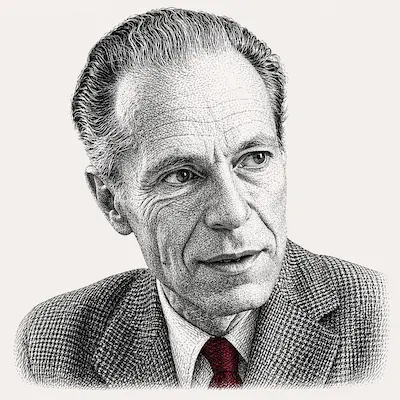
Irreversible closure forecloses options that cannot be recreated when circumstances change.
Hirschman's irreversibility principle applies directly here. Closing Groningen permanently eliminates future energy capacity that cannot be rebuilt quickly. Ostrom's polycentric framework provides the governance mechanism, but the fundamental choice is between reversible suspension and irreversible closure. My development work in Colombia taught me that preserving options under uncertainty is more valuable than optimising for current conditions.
The hiding hand principle suggests we cannot predict future energy scenarios accurately enough to make permanent decisions. Climate transitions may create supply disruptions we cannot anticipate. Geopolitical shifts may eliminate current import sources. Emergency capacity with strong local governance preserves flexibility while addressing current harms. Permanent closure assumes we know the future better than we do.
The convergence note
Where the council converges: Current governance fails local communities. Emergency-only operation requires fundamentally different rules than commercial production.
Where it divides: Whether permanent closure or emergency capacity with local control better balances sovereignty and justice.
For a policymaker to decide on: Define specific emergency conditions, compensation mechanisms, and local veto powers that make strategic reserves compatible with community protection.