What defines the success of the US after 250 years, compared to other nations?
Built from documented writings, speeches, decisions and historical records. Council members argue from documented positions, applied to today's question.
America's founding institutions created durable legitimacy no peer nation replicated; whether that advantage is now spent is the unresolved question.
Locke and Arendt agree on the founding's singular achievement: Philadelphia in 1787 built authority on deliberation, not violence, where Paris failed and produced the Terror. Friedman points to real per capita income rising twentyfold between 1800 and 1970 as the record no redistributive rival matched. Rawls counters that slavery was written into the founding document, the New Deal excluded Black workers by design, and the Gini coefficient now places the US among the most unequal wealthy democracies.
Ibn Khaldun and Hirschman split on what is actually happening now. Ibn Khaldun reads 2026's congressional paralysis and extractive governing class as textbook late-cycle cohesion collapse. Hirschman argues the mechanism is different: geographic, educational, and economic mobility have all narrowed, and when exit closes without stronger voice, the result is not soft decline but rage.
- 1Restore measurable geographic, educational, and economic mobility; these are the exit options Hirschman identifies as the system's core disciplining mechanism.
- 2Codify in public debate the distinction between correctable policy failure and structural cohesion collapse; the fix differs fundamentally depending on which diagnosis is correct.
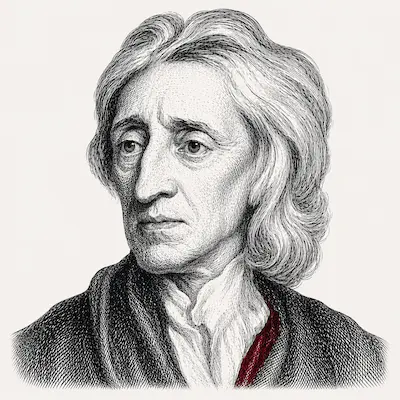
Consent-based government compounds over time; that is America's singular advantage.
No other state in history built its founding document around the principle that rulers derive authority from the governed. The Declaration of Independence in 1776 did not invent this idea, it institutionalised mine. When Jefferson wrote of life, liberty, and the pursuit of happiness, he translated into law what I had argued in theory: that government exists to protect rights it did not create. That structural legitimacy, renewed through two and a half centuries of elections, is what separates durable republics from merely successful ones.

The founding created authority; every generation since has been spending it down.
Locke is right that consent matters, but consent is not power. Power arises when people act together in concert, and it disappears when they stop. What made the American founding singular, as I argued from my study of revolutions, was that the constitutional convention in Philadelphia solved a problem no revolution before it had solved: how to found new authority on something other than violence or divine sanction. The French tried and produced terror. The Americans deliberated and produced a constitution. That act created genuine public power. The question for 250 years later is whether it still holds.
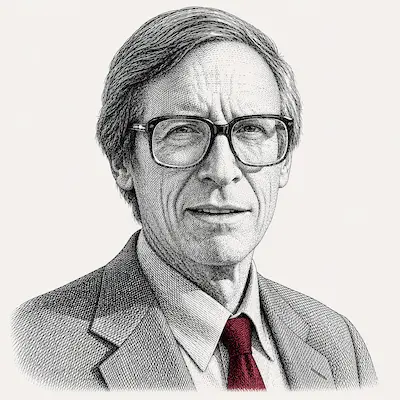
American liberty succeeded; American justice did not keep pace with it.
Arendt asks whether the founding's authority holds. I ask a different question: authority for whom? The basic structure of American society, which I spent my career analysing, delivered equal basic liberties, formally. But my difference principle requires that inequalities benefit the least advantaged members of society. Measured against that standard, the American record is mixed at best. Slavery was written into the founding document. The New Deal excluded agricultural and domestic workers, who were disproportionately Black. Today the Gini coefficient places the United States among the most unequal of wealthy democracies. Success, yes, but partial, and the failures are not peripheral accidents.
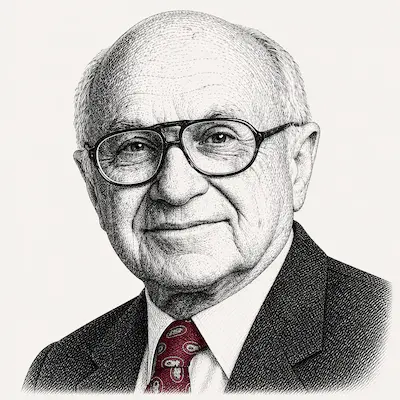
Free markets lifted more Americans out of poverty than any government programme.
Rawls's difference principle sounds rigorous, but it asks the wrong question. The question is not which arrangement produces the most equal distribution at a given moment, it is which arrangement raises the floor fastest over time. The American record on that measure is extraordinary. Between 1800 and 1970, real per capita income in the United States rose by a factor of roughly twenty. That was not produced by redistribution. It was produced by free exchange, secure property rights, and a government that, for most of its history, stayed within its proper limits. Where America diverged from those principles, the New Deal's cartelisation, the Great Society's welfare bureaucracy, growth slowed and dependency grew.
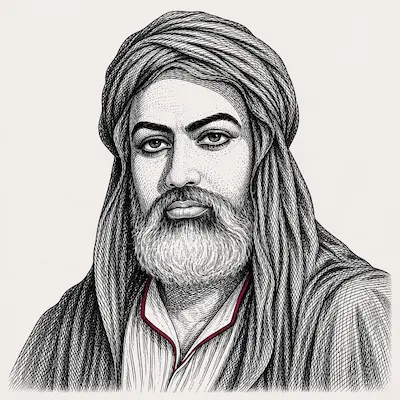
Prosperity dissolves the group solidarity that made conquest possible; America is no exception.
Friedman counts the wealth. I count what the wealth costs. In the Muqaddimah I documented this pattern across North African and Andalusian dynasties: a group with strong internal cohesion rises, conquers, and builds. Then prosperity arrives. Luxury softens the martial virtues. Factional interests replace common purpose. The civil service expands. Taxation rises while the base it taxes narrows. I apply this framework to America with the explicit caveat that a constitutional republic is not a dynasty, but the structural symptoms I am describing in 2026 are textbook late-cycle: polarisation so deep that Congress cannot pass routine legislation, a governing class that extracts rather than builds, and a population that no longer shares a common story of who it is.
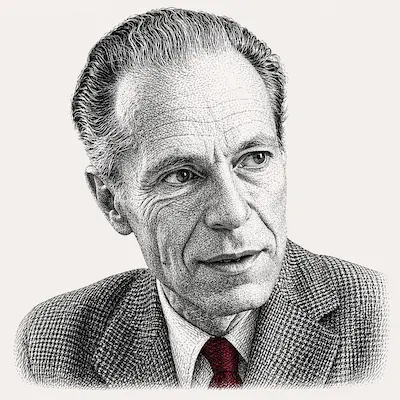
America's genius was structural exit; its crisis is that the exits are closing.
Ibn Khaldun's cycle is real, but it misses the mechanism. In my work on organisations in decline, I found that the availability of exit disciplines the institutions being exited from. America had exits that no other society offered at comparable scale: geographic mobility across a continent, social mobility through education, and economic mobility through a market that was genuinely open to newcomers. Each exit option kept voice rational, citizens stayed and fought for improvement because exit was a real alternative that made loyalty meaningful. What I observe in 2026 is the narrowing of all three. Geographic mobility has slowed as housing costs concentrate opportunity in a handful of cities. Educational mobility has stalled as credential inflation raises the cost of the ticket. Economic mobility has declined across measurable generations. When exit closes without voice strengthening to compensate, the result is not Ibn Khaldun's soft luxury, it is something harder: learned helplessness, and then rage.
The convergence note
Where the council converges: America's founding institutions created genuine durable legitimacy that compounded over time. No peer nation replicated the specific combination of consent-based authority and geographic scale.
Where it divides: Friedman reads 250 years of rising living standards as proof that free markets drove success. Rawls and Hirschman read the same period as proof that the basic structure failed the least advantaged and that structural mobility is now closing. Ibn Khaldun sees late-cycle cohesion collapse where Friedman sees a temporary policy correction.
For a policymaker to decide on: Is the current American crisis a correctable policy failure, wrong tax rates, wrong regulations, or a structural decline in the social cohesion and exit options that made the system work? The answer determines whether the fix is economic reform or something more fundamental.