The Long Council
Who was selected, and why
What defines the success of the US after 250 years, compared to other nations?
The central tension
Does America's success come from its free institutions and individual liberty, or from its size, resources, and power that any framework could have used?
Selected members
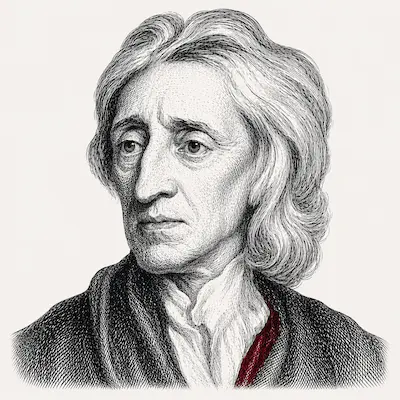
John Locke
Will argue: The US succeeded because it institutionalised natural rights and consent-based government, creating durable legitimacy that compounded over time.
American constitutionalism is his intellectual property, life, liberty, property, and consent of the governed are Lockean foundations.
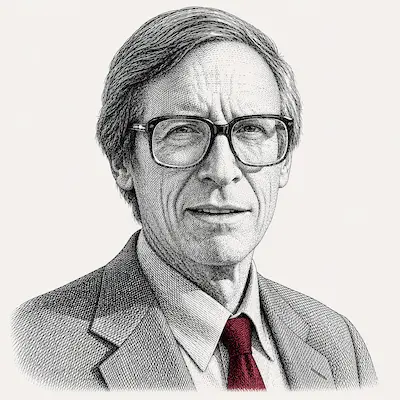
John Rawls
Will argue: American success is real but partial, it achieved basic liberties but failed the difference principle, and its deepest failures (racial exclusion, inequality) are not peripheral but structural.
He spent his career asking what makes a just society, using the United States as his primary case study and referent.
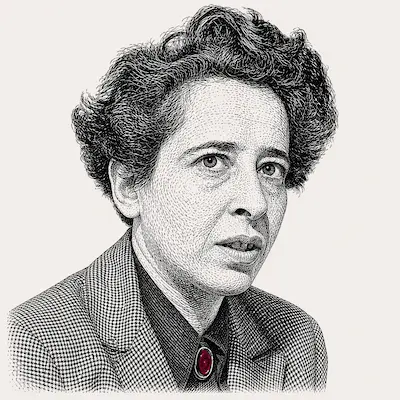
Hannah Arendt
Will argue: American success rests on the singular achievement of the founding, a constitution that created genuine public power, but democratic erosion and the "rule by nobody" of bureaucratic government now threaten what was built.
She wrote On Revolution specifically comparing the American and French Revolutions and explaining why the American founding succeeded where others failed.
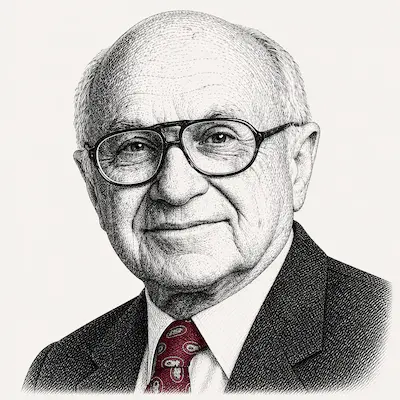
Milton Friedman
Will argue: American success came from free markets, limited government, and sound money, and the divergence from these principles since the New Deal explains why relative performance has weakened.
He argued explicitly and repeatedly that American prosperity was the product of economic freedom, and that the 20th century's expansion of government was eroding its foundations.
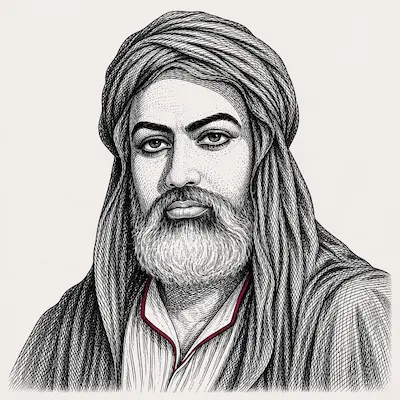
Ibn Khaldun
Will argue: America's 250 years look like a classical asabiyya arc, founding cohesion enabling conquest and consolidation, prosperity eroding that cohesion, and current polarisation exhibiting the textbook symptoms of late-cycle institutional decay.
His dynastic cycle framework, asabiyya rising, prosperity eroding cohesion, decline, applies to civilisational trajectories across centuries, which is exactly the question being posed.
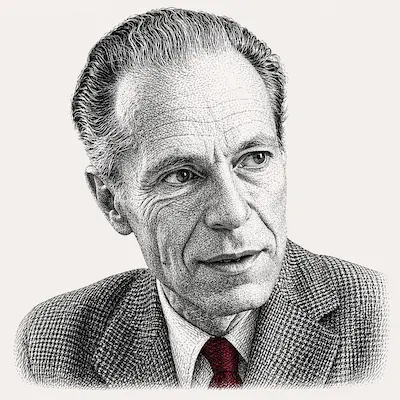
Albert O. Hirschman
Will argue: American success is better explained by the structural availability of exit options and productive tensions than by any single ideological framework, and the closing of those exit options is the most reliable leading indicator of decline.
His exit/voice/loyalty framework and his hiding hand principle both illuminate specifically American dynamics, the safety valve of geographic and social exit, and the role of productive tensions in American institutional development.
Considered but not selected
Amartya Sen: Directly relevant on whether GDP and power constitute genuine success versus capability expansion; however, his framework duplicates Rawls's critique of the wrong metrics and his strongest documented work concerns India and famine, not the American case. Rawls makes the normative critique more precisely for this specific question.
Franklin D. Roosevelt: The most consequential American practitioner on the roster; excluded because the question asks for analytical frameworks comparing the US to other nations, not for an insider account. His presence would shift the session toward advocacy for the New Deal model rather than comparative assessment.
Hannah Arendt over Rousseau: Rousseau's general will framework is flagged for live deployment only when popular sovereignty and its limits are the central tension. Here the founding is the analytical pivot, and Arendt's On Revolution engages it more precisely than Rousseau's abstract theory of the general will.