The Long Council
Who was selected, and why
Why is there so much unrest in France, and how could this be turned around?
The central tension
Should France restore order first through firm state authority, or address the underlying economic grievances first even if unrest continues?
The two poles
Order first
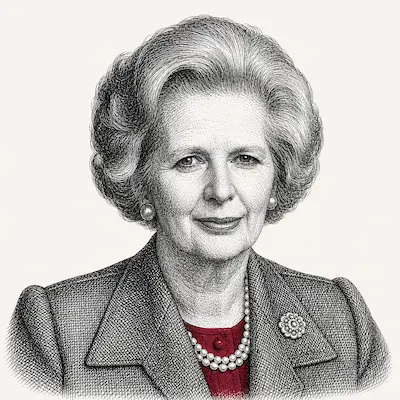 Margaret Thatcher
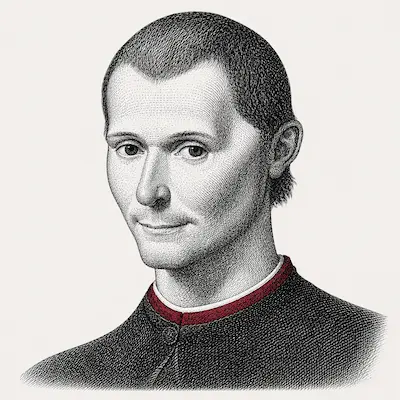 Niccolò Machiavelli
Address grievances and inclusion
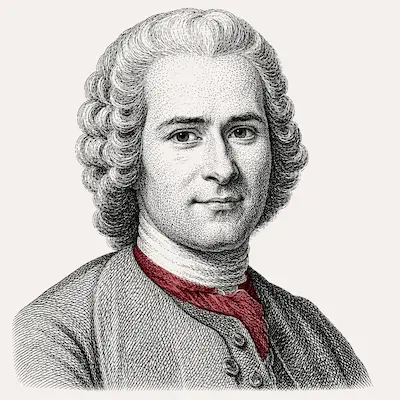 Jean-Jacques Rousseau
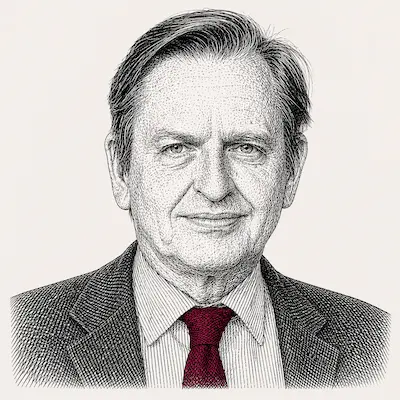 Olof Palme
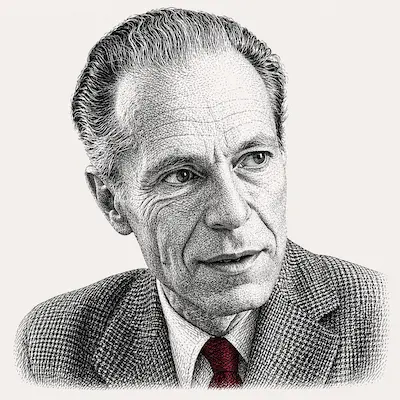 Albert O. Hirschman
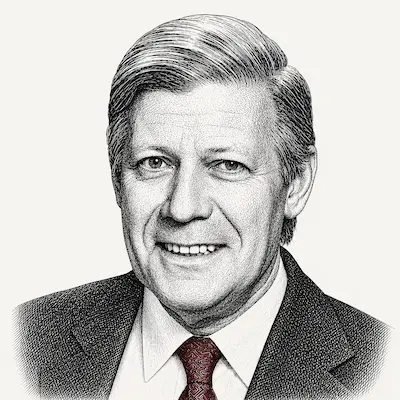 Helmut Schmidt
sitting closer to the grievance
Selected members
Jean-Jacques Rousseau
Will argue: Rising inequality has broken the social contract and the unrest is a predictable symptom of a corrupted general will.
He is the foundational theorist of when popular unrest reflects legitimate general will versus factional breakdown in a republic.
Margaret Thatcher
Will argue: Concessions to street violence invite more violence and the state must restore order and fiscal discipline first.
She faced down sustained union and street unrest in Britain and has a documented framework on when a government must hold firm against disorder.
Niccolò Machiavelli
Will argue: Macron must act decisively and visibly now, because hesitation signals weakness and invites escalation from all factions.
His framework on new disorders, the structural difficulty of reform, and when force is necessary speaks directly to a government facing simultaneous reform pressure and violent unrest.
Olof Palme
Will argue: France's unrest reflects a failure to protect ordinary living standards and the answer is renewed investment in public services and equality, not repression.
His documented Swedish model shows that addressing living-cost and inequality grievances through active state policy can defuse unrest while preserving both democracy and economic performance.
Albert O. Hirschman
Will argue: The unrest shows that normal channels of voice such as unions and local consultation have broken down, and France needs to reopen them rather than closing them further.
His exit, voice and loyalty framework directly explains why protest over school funding escalated into generalized unrest when institutional voice channels failed.
Helmut Schmidt
Will argue: A government in crisis must combine visible firmness on violence with credible fiscal and social commitments, since consensus without discipline or discipline without consensus both fail.
He governed through domestic terrorism, economic shocks, and union unrest while maintaining European stability, offering a pragmatic crisis-management counterpoint to both pure repression and pure concession.
Considered but not selected
Hannah Arendt: her framework on power versus violence and democratic erosion is relevant but overlaps substantially with Rousseau and Hirschman on legitimacy without adding a distinct policy-relevant pole. Friedrich Hayek, his knowledge-problem and spontaneous order arguments are less directly engaged by the article's central claim about living costs and unrest than Thatcher's documented practitioner experience of confronting street disorder. Frantz Fanon, his post-colonial framework on state legitimacy is a poor fit since France is an established liberal democracy, not a post-colonial or colonial context.