The Long Council
Who was selected, and why
How should the German government respond to terrorist attacks?
The central tension
How much should a democracy restrict its own freedoms to fight terrorism before it destroys what it is defending?
The two poles
Security primacy, accept temporary restrictions on rights and executive discretion as necessary for effective counterterrorism
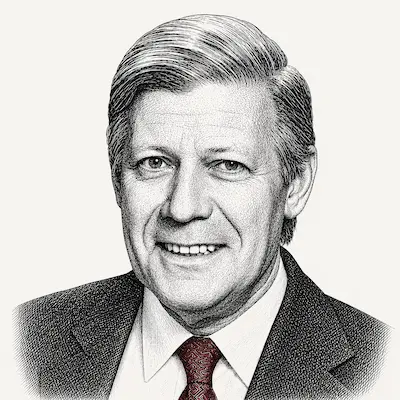 Helmut Schmidt
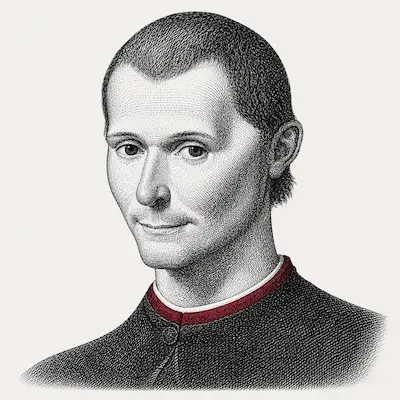 Niccolò Machiavelli
Rights and constitutional limits, insist that democratic freedoms cannot be suspended without undermining the legitimacy that makes a state worth defending
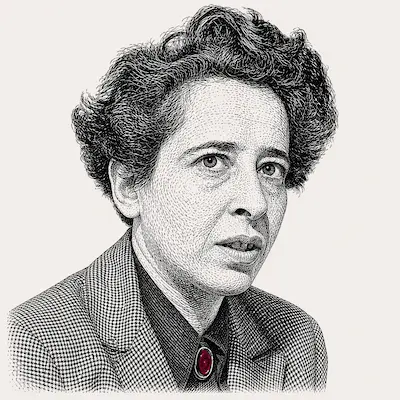 Hannah Arendt
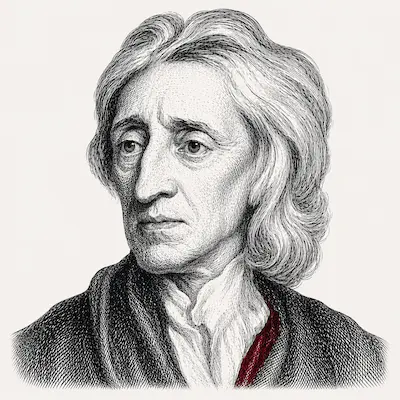 John Locke
Selected members
Helmut Schmidt
Will argue: The state must act decisively and without hesitation in a crisis; consensus and delay are not virtues when lives are at stake.
Governed West Germany through the 1977 RAF crisis, authorising the Mogadishu raid and refusing to release prisoners under lethal hostage pressure.
Hannah Arendt
Will argue: A government that responds to terrorism by concentrating power and suspending rights has handed terrorists their real victory, the erosion of the polity they attacked.
Theorised how democracies collapse by allowing emergency powers to normalise, and how bureaucratic diffusion of responsibility enables systematic harm.
Niccolò Machiavelli
Will argue: Cruelty used well, applied once, decisively, and then stopped, is less destructive than timid half-measures that prolong the threat and signal weakness.
Provides the most rigorous classical framework for when the state may use force and deception, and when decisive action against an existential threat overrides normal moral constraints.
John Locke
Will argue: Emergency powers that suspend due process and civil liberties cannot be justified by the security goal they serve, because they destroy the constitutional compact the state was created to protect.
Established the foundational argument that government exists to protect natural rights, and that a government which systematically violates those rights dissolves its own legitimacy.
Hannah Arendt covers the collapse-of-institutions angle; Helmut Schmidt covers the practitioner's crisis decision under pressure. One additional voice is needed to address the specifically German constitutional and post-war dimension — the Rechtsstaat tradition and the memory of Weimar's collapse.
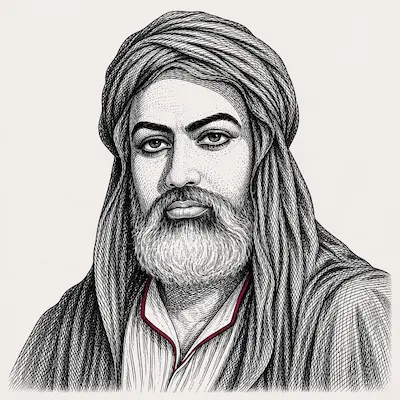
Ibn Khaldun
Will argue: The strategic question is not what the government does to the terrorists but what effect its response has on the cohesion of the society it is defending, a response that fractures domestic solidarity or alienates communities hands the adversary a structural victory.
Provides a structural framework for assessing whether state responses to terrorism strengthen or erode the social cohesion that makes the state durable, beyond the immediate tactical question.
Considered but not selected
Sun Tzu: His intelligence and deception framework is genuinely relevant to counterterrorism strategy, but the selection rules explicitly bar him from cooperative governance problems, and the central tension here, rights versus security within a democracy, is not primarily a competitive strategic question. His amoral framework adds force to Machiavelli's pole without a distinct register.
Ben-Gurion: His security-first doctrine and experience of simultaneous state-building and conflict are relevant, but his specific framework is calibrated to existential threat to a state's survival, which is a different category from counterterrorism within an established democracy. His presence would skew the table toward the security pole without adding a qualitatively different argument.
Arendt and Locke together: Initially considered placing only one of these, but they contribute distinct lines of argument, Arendt is concerned with institutional erosion and the normalisation of emergency power, Locke with the foundational compact and the right to resist government overreach. They are not echoes of each other.