How should the German government deal with regular terrorist attacks by muslim immigrants?
Built from documented writings, speeches, decisions and historical records. Council members argue from those positions, applied to today's question.
Prosecute and deport individuals who commit or plan attacks. Do not govern by religious category.
Schmidt draws on his 1977 hostage crisis: the state holds its nerve by holding to law, not by abandoning it. Sen points to the 2006 mechanism: when policy reduces a Berliner of Turkish background to only a Muslim, it does the recruiter's work for him. Arendt's eighteen years of statelessness after 1937 supply the warning: a religious-ethnic category, once named in law, gets administered and then exclusionary.
Ibn Khaldun closes the case with the Almoravids: external pressure on a group with internal solidarity does not break it, it consolidates it. Germany's Muslim communities are not yet a unified political force; policies that treat them as one will make them one.
- 1Prosecute and deport individuals convicted of or credibly planning terrorist attacks; apply existing German criminal law, not religious category.
- 2Strip no residency or citizenship status on the basis of religious or ethnic designation; confine deprivation to individual criminal conduct.
- 3Publish explicit government guidance distinguishing individual criminal liability from collective community suspicion in counterterrorism operations.

Security without rule of law is not security at all.
In October 1977 I refused to release RAF prisoners even with a hostage's life at stake. That decision was hard precisely because I held to the law. The same discipline applies here. Germany must prosecute, deport, and where necessary pre-empt. But the moment we treat every Muslim immigrant as a suspect category, we have abandoned the constitutional order we are defending. I said in 2010 that multiculturalism had failed, and I stand by the concern. I do not stand by collective suspicion as policy.

Securitising a religion strips political membership from millions.
Schmidt's challenge names the exact danger. I was stateless for eighteen years after Germany stripped me of citizenship in 1937. I watched the logic closely: first a category is named, then it is administered, then it is excluded. The category "Muslim immigrants" is not a security classification. It is a religious and ethnic designation applied to millions of people with different languages, histories, and loyalties. Once a state governs by that category, it has already enacted the structure it claims to be fighting.
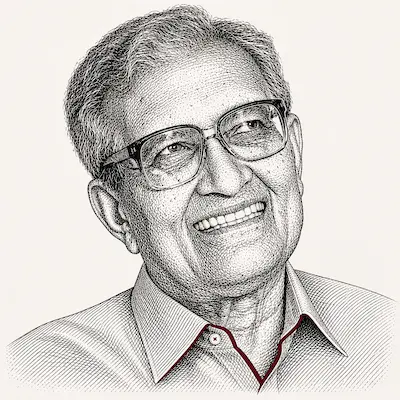
Forcing singular identity onto a group produces the violence you fear.
Arendt's question is fair, and I will answer it directly. In 2006 I argued that violence is not produced by civilisational difference but by the political imposition of a single identity on people who actually hold many. A German-born man of Turkish background is also a Berliner, a football supporter, an engineer. When policy treats him only as a Muslim, it erases the other identities. That erasure is not neutral. It does exactly what a recruiter for a violent movement needs done for him.
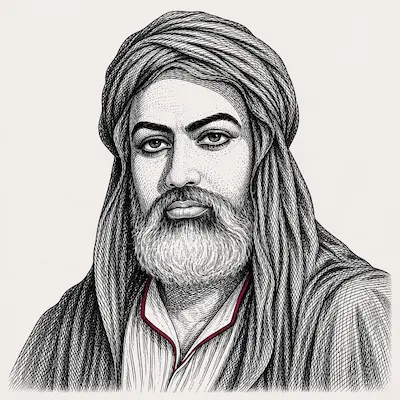
Exclusion builds the enemy's cohesion while dissolving your own.
Sen's question I can answer from observation, not theory alone. I watched the Almoravids and the Almohads rise from the Saharan periphery. Both movements began as excluded groups under pressure from a dominant centre. External pressure on a group with internal solidarity does not break it. It consolidates it. Germany's Muslim communities are not yet a unified political force. Policies that treat them as a single hostile category will make them one. The state loses asabiyya precisely by driving its own residents into a rival solidarity.