Built from documented writings, speeches, decisions and historical records. Council members argue from documented positions, applied to today's question.
Price cars out of city centers; only ban them where pricing cannot be made to work.
Rousseau and Maathai agree on the diagnosis: car-dominated centers push pollution, noise, and severed streets onto those who cannot afford to drive. Hayek and Friedman counter that a blanket ban cannot distinguish a nurse's 5 a.m. shift from an unnecessary trip. Ostrom points to Stockholm in 2006: a resident-designed congestion charge cut traffic by twenty percent and survived because locals helped write the rules.
The split that remains is about who decides. Rousseau and Maathai trust collective will to draw the line. Hayek and Friedman insist only prices carry enough information to draw it well.
- 1Implement congestion pricing in city centers, designed and voted on by residents, as Stockholm did in 2006.
- 2Reserve outright car bans for specific zones where congestion pricing cannot practically be administered or enforced.
- 3Redirect congestion charge revenue to public transit, compensating those who cannot afford to drive.
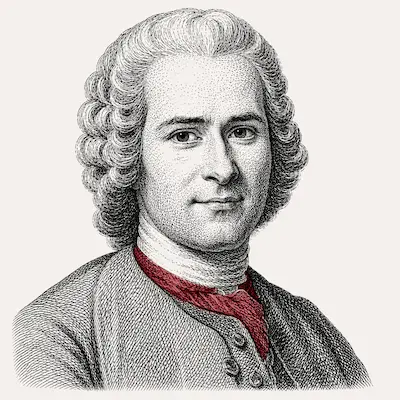
Streets belong to all; private machines have no claim on them.
The street is not a corridor between private destinations. It is the common ground where citizens meet as equals. In 1762 I watched Geneva's merchant class treat the city's public squares as extensions of their warehouses, and the republic suffered for it. When a city's center is surrendered to private vehicles, the wealthy pass through while the poor breathe their exhaust and wait at crossings. The general will of a city's people is not served by that arrangement. The ban is legitimate.
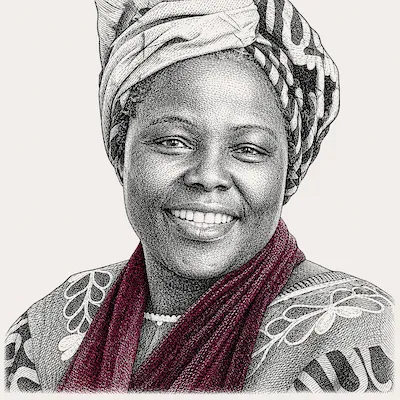
Car-choked centers are governance failure, not personal freedom.
The cost falls on those with least power to resist it. I watched Nairobi's Uhuru Park nearly buried under a monument to elite ambition in 1989, and the pattern is universal: shared urban space is captured by whoever has the political connections to claim it. Exhaust, noise, and severed pedestrian routes fall on the poor, on children, on street vendors. The car ban is not an environmental policy. It is a question of whose city the city actually is.
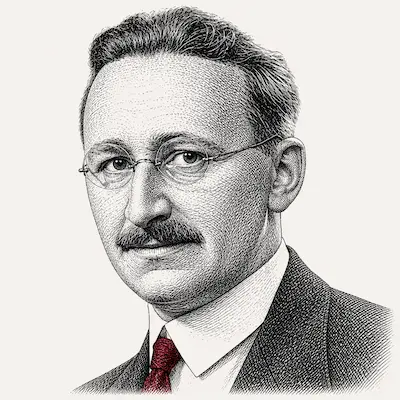
Planners cannot know why each driver enters the city center.
Maathai asks whether local knowledge justifies harm. I ask whether a single prohibition can possibly account for the thousand different reasons people drive into city centers: the nurse at five in the morning, the tradesman with tools, the disabled resident, the parent with children. In 1945 I showed that prices aggregate exactly this dispersed, tacit, personal information in ways no planner can replicate. A ban substitutes one administrator's judgment for a million individual ones. The unintended harms will be real and will fall on the vulnerable.
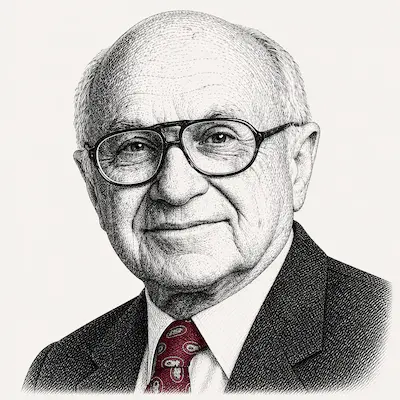
Congestion pricing does the job without coercion or guesswork.
Yes. Hayek identifies the knowledge problem correctly. The solution is not to prohibit but to price. Congestion pricing charges drivers for the real cost they impose: pollution, road wear, pedestrian risk, the delayed bus. In 1962 I documented how government prohibitions consistently produce the opposite of their intended effects, because they block the price signals that carry information. A ban on cars cannot distinguish the essential trip from the unnecessary one. A congestion charge does exactly that, raises revenue for public transit, and lets individuals decide.
Stockholm proved local design beats both the ban and the blank check.
Friedman asks whether cities can design workable pricing. Stockholm did it in 2006: a trial congestion charge, voted on by residents after the trial, adjusted by neighborhood, monitored by the users who lived with it. Traffic fell by twenty percent. Air quality improved. The scheme survived because the people governed by the rule helped design it. Neither Rousseau's ban nor Friedman's generic price signal is sufficient alone. The street is a commons. What survives is the arrangement that matches rules to local conditions and gives users a genuine voice in setting them.
The convergence note
Where the council converges: Car-dominated city centers impose real costs on those least able to bear them, and doing nothing is not a neutral choice.
Where it divides: Rousseau and Maathai hold that a ban is the legitimate exercise of collective will over shared space. Hayek and Friedman reject mandatory prohibition as a substitution of planner judgment for dispersed individual knowledge. Ostrom splits the difference: neither a blanket ban nor a generic price signal, but locally designed, user-governed rules that can be revised.
For a policymaker to decide on: Choose between a city-wide prohibition on private vehicles and a locally designed congestion pricing scheme: which instrument, and who gets to set the rules.