The Long Council
Who was selected, and why
Should cities ban cars from their centers?
The central tension
Does banning cars from city centers expand freedom by reclaiming public space, or restrict it by limiting how people move?
The two poles
Reclaim public space
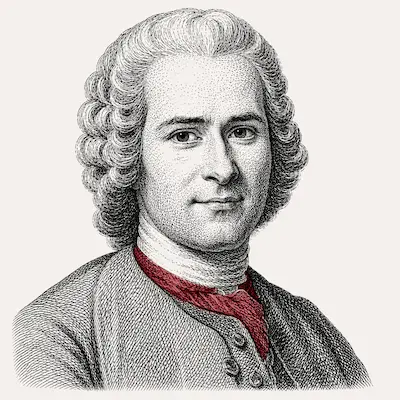 Jean-Jacques Rousseau
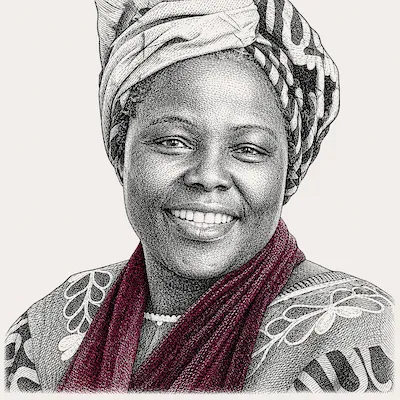 Wangari Maathai
Preserve individual mobility
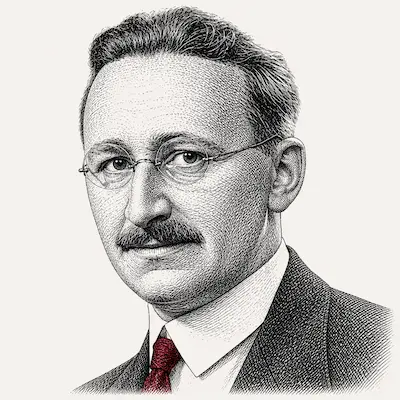 Friedrich Hayek
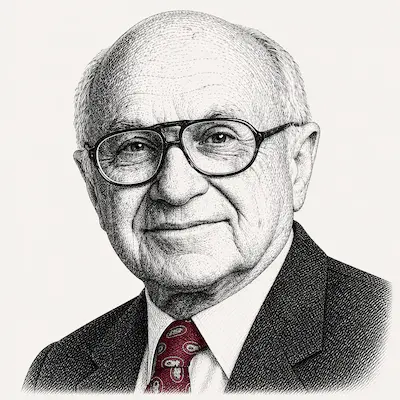 Milton Friedman
Selected members
Jean-Jacques Rousseau
Will argue: Streets belong to the political community and their governance must serve the common good, not aggregate private preferences.
His general will framework asks what the city's streets are for as a collective good, not individual preference.
Wangari Maathai
Will argue: Car-dominated city centers are a governance failure that concentrates the costs of pollution and displacement on those with least power to resist.
Her framework links urban environmental degradation directly to governance failure and the capture of shared space by powerful interests.
Friedrich Hayek
Will argue: Urban planners cannot possess the dispersed knowledge of why individuals need cars in city centers; a ban substitutes a single design for a complex evolved order and will produce unintended harms.
His spontaneous order and knowledge-problem arguments directly challenge centrally imposed bans on how individuals use urban space.
Milton Friedman
Will argue: A ban is the wrong instrument; congestion pricing internalises the externality, preserves individual choice, and generates revenue for public transport without coercive prohibition.
His framework identifies who bears the costs of the ban and whether the market mechanism, congestion pricing, would achieve the same goal without coercion.
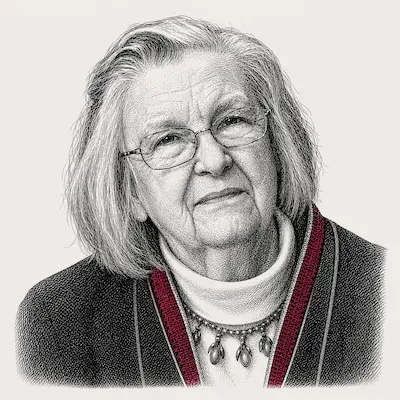
Elinor Ostrom
Will argue: The street-space governance question requires locally designed rules with user participation, graduated sanctions, and monitoring, a blanket ban imposed from above will fail where a negotiated local governance arrangement might succeed.
City street space is a genuine urban commons subject to overuse and collective-action failure; her design principles apply directly to the question of how to govern it.
Considered but not selected
Amartya Sen: The capability approach is relevant (mobility as a capability), but his framework largely replicates the freedom-versus-access tension already present at the table; Hayek and Friedman cover the individual-mobility pole more sharply, and Ostrom covers the institutional design question he would raise. Adding Sen would echo without adding a genuinely distinct line of reasoning.
Albert O. Hirschman: His exit/voice framework (who can afford to exit a car ban by buying an electric car or moving, and who cannot) is genuinely relevant and his irreversibility principle applies to infrastructure decisions. However, his strongest contributions are to development economics and institutional decay; the urban commons question is better covered by Ostrom, who brings empirical design principles rather than analogical framework application.
Rousseau (general will flag): Per the special flag in the selection rules, Rousseau's general will concept is live in this question, and it is present at the table. No additional flag needed beyond noting it is engaged through his selection.