British re-entry to the EU requires rebuilding trust through sustained practical cooperation before any formal membership discussions, but the fundamental question of whether Britain can genuinely commit to European integration over Atlantic partnership remains unresolved.
Thatcher warns that rejoining means accepting worse terms and inevitable loss of the sovereignty Brexit reclaimed, while Schmidt argues that medium powers like Britain gain more practical autonomy through European institutions than by acting alone. De Gaulle insists any membership requires choosing European over Atlantic identity — the same ambiguity that produced Brexit — while Adenauer proposes patient reconstruction through security, research, and climate cooperation that demonstrates mutual usefulness.
The council cannot resolve whether British political culture has evolved enough to sustain long-term European commitment, or whether the structural tension between British exceptionalism and European solidarity makes successful membership impossible.
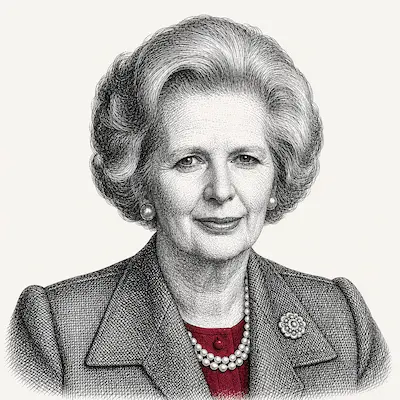
Rejoining the EU means surrendering the sovereignty we reclaimed through Brexit.
My documented experience with European integration taught me that membership inexorably leads to the transfer of power from Westminster to Brussels. The Single European Act, which I signed in 1986, was my greatest documented mistake — I failed to understand how qualified majority voting would reduce British veto power. The European project has one consistent trajectory: ever-closer union, and no British government can control that momentum once inside.
Any rejoining would occur on worse terms than our 1973 entry. We would likely face pressure to adopt the euro, accept the European Court of Justice's supremacy, and contribute to EU fiscal transfers. The economic argument for membership — access to the single market — ignores that we can trade with Europe as a sovereign nation. My documented position remains: we can cooperate with Europe without being governed by Europe.
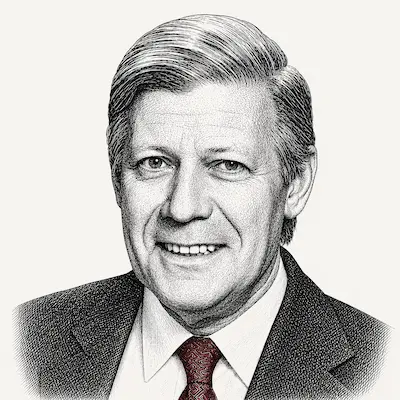
European integration multiplies sovereignty rather than diminishing it for medium powers like Britain.
Margaret, your opposition to the European Monetary System taught me something important: Britain's island geography creates a fundamentally different relationship to European stability than continental powers experience. But your sovereignty argument misses the essential point. When I created the EMS with Giscard in 1978–79, it was precisely to preserve monetary sovereignty against dollar dominance. A medium power acting alone has less real sovereignty than one acting through European institutions it helps design.
Britain's documented experience since Brexit — from Northern Ireland protocol disputes to diminished diplomatic influence — demonstrates that formal sovereignty without strategic weight produces less practical autonomy, not more. The correct question is not whether to pool sovereignty, but how to structure that pooling to maximise British influence over decisions that will affect Britain regardless of membership status.

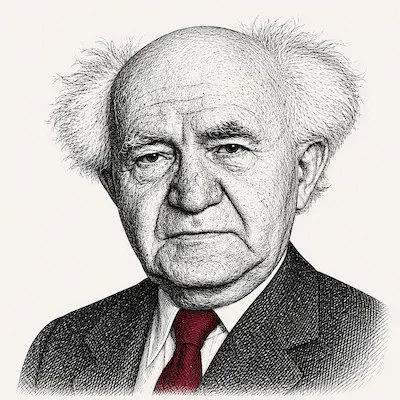
British membership requires genuine commitment to the European project, not merely economic convenience.
Schmidt raises the essential question I posed in 1963 and 1967: is Britain prepared to be truly European? My vetoes were not anti-British prejudice but recognition that half-hearted membership serves neither Britain nor Europe. Britain's approach has always been transactional — what can Europe do for Britain — rather than structural — how can Britain contribute to European power.
The fundamental issue remains unchanged: Britain must choose between being a global maritime power in partnership with America, or being a European power committed to continental destiny. Brexit settled this question — Britain chose the Atlantic relationship. Any rejoining that maintains this ambiguity would reproduce the same tensions that led to Brexit. Europe needs members who see European integration as their primary strategic commitment, not their fall-back option when other relationships prove insufficient.
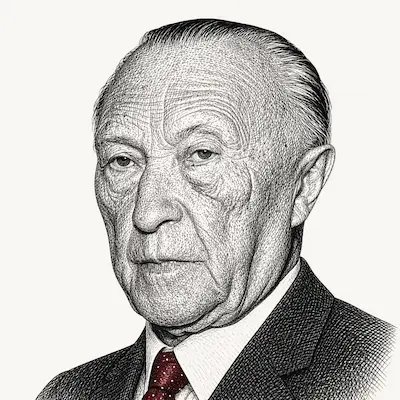
Integration through patient reconstruction of practical cooperation offers the only sustainable path.
Charles, your concern about British commitment is documented and valid, but my experience building Franco-German reconciliation teaches a different lesson. Reconciliation begins with acknowledgment of mutual interest, not with declarations of permanent friendship. When I negotiated with your predecessors, France did not trust German intentions — and rightly so. Trust was built through practical cooperation that demonstrated changing behaviour, not changing rhetoric.
British re-entry requires the same patient reconstruction. Begin with areas of clear mutual benefit — security cooperation, research collaboration, climate policy — and build institutional habits of working together. The broader question of British European identity cannot be resolved through political declaration but only through sustained practical engagement that proves British usefulness to European purposes and European necessity to British interests.
The convergence note
Where the council converges All members accept that successful British-EU relations require genuine mutual benefit, not merely British convenience or EU punishment. Economic integration alone is insufficient — political trust and strategic alignment are necessary foundations.
Where it divides Thatcher sees sovereignty as indivisible and European integration as inherently incompatible with democratic accountability. Schmidt and Adenauer view sovereignty as shareable and multiplied through integration. De Gaulle focuses on the requirement for genuine European commitment that Britain has not demonstrated.
For a policymaker to decide on Whether British political culture has evolved sufficiently since Brexit to sustain the long-term commitment to European integration that membership requires, or whether the underlying tension between British exceptionalism and European solidarity remains structurally irresolvable.