Which tax policy maintains a welfare state while protecting the dynamism needed to support growth and innovation?
Tax policy splits between building capabilities that enable innovation and preserving incentives that reward it.
Palme and Sen argue progressive taxation funds education and security that free people to innovate. Thatcher and Hayek contend rates above 40% destroy entrepreneurial incentives. Keynes bridges them: timing and purpose matter more than absolute levels.
The split is irreducible because it rests on different beliefs about human motivation and institutional trust.
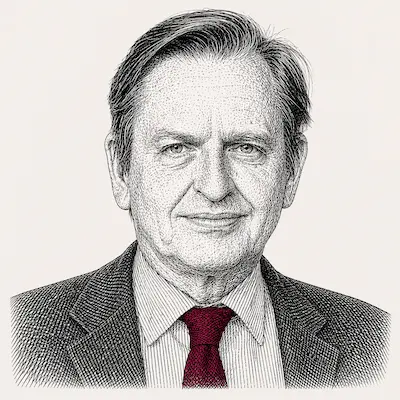
High taxes fund the institutional trust that makes innovation possible.
When I steered Sweden through the 1970s oil crises, we maintained both full employment and technological advancement while running the world's most redistributive tax system. The Rehn-Meidner model combined 60% marginal tax rates with active labour market policy that retrained workers for emerging industries. Swedish productivity growth exceeded OECD averages precisely because universal childcare, education, and healthcare freed people to take entrepreneurial risks. A worker who knows their family's security doesn't depend on their current job is more willing to start a company or retrain for new technology.
The deeper insight is that equality builds efficiency rather than trading against it. Social insurance creates institutional trust. Trust reduces transaction costs. When citizens believe their society will support them through failure, they attempt difficult innovations that benefit everyone. High taxation funds not just welfare payments but the social infrastructure — research universities, technical training, industrial policy — that creates competitive advantage.
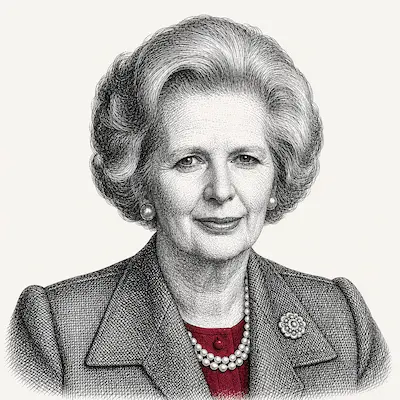
Taxation above 40% destroys the incentives that create wealth to redistribute.
Palme's Sweden succeeded despite high taxation, not because of it, and the model collapsed the moment global capital became mobile. When I took office in 1979, Britain's 83% top marginal tax rate had produced industrial decline, capital flight, and the three-day week. We cut the top rate to 40% and basic rate to 25%. The result: London became Europe's financial centre, productivity surged, and tax revenues actually increased because people stopped avoiding taxes and started creating wealth. The Laffer Curve is not theory — it is documented British experience.
Sweden's model only worked because of exceptional circumstances: ethnic homogeneity, small size, and Cold War neutrality that let it free-ride on Western defence spending. The moment Sweden faced competition for mobile capital and skilled labour, the model required modification. By the 1990s even Sweden was cutting marginal rates and reforming welfare. High taxation kills the entrepreneurial spirit that creates the wealth progressive politicians want to redistribute. You cannot tax your way to prosperity.
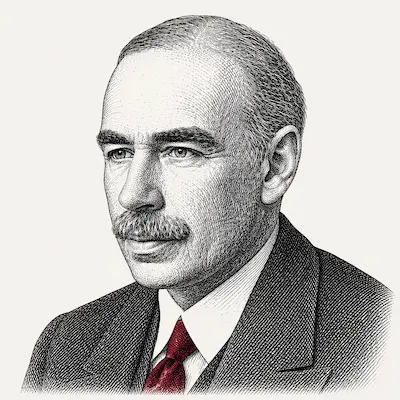
Taxation must be counter-cyclical — high in booms to prevent overheating, targeted investment always.
Thatcher misunderstands the relationship between taxation and economic dynamism. During Britain's wartime mobilisation, which I helped design through "How to Pay for the War," we combined high progressive taxation with massive public investment in technology, education, and infrastructure. The result was not stagnation but the most rapid technological advancement in British history. The question is not whether to tax but when and for what purpose. High taxation during economic booms prevents asset bubbles and overheating while funding the institutional capacity that enables long-term growth.
The Swedish model succeeded because it combined demand management with supply-side investment. Progressive taxation funds universities, research institutes, and infrastructure — the public goods that private markets systematically underprovide. But taxation must be intelligent: counter-cyclical in timing, progressive in structure, and targeted toward capability-building rather than mere consumption support.
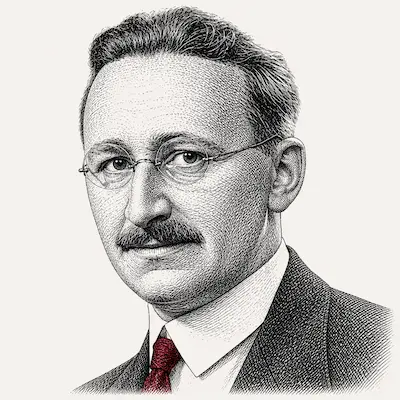
The price system coordinates knowledge no planner can possess — including knowledge about innovation.
Keynes fundamentally misunderstands the knowledge problem. Innovation happens precisely because entrepreneurs possess local, tacit knowledge that central planners cannot access — knowledge about unmet needs, emerging technologies, and profit opportunities. When Sweden's government directed investment through active industrial policy, it systematically missed the information revolution that entrepreneurs in Silicon Valley discovered through market experimentation. High marginal tax rates destroy the incentive structure that motivates this entrepreneurial discovery process.
I accept that some social insurance floor is compatible with freedom — I argued for a guaranteed minimum income in The Constitution of Liberty. But progressive taxation above that floor distorts the price signals that coordinate complex economic activity. The welfare state should provide security without destroying incentives. A basic income floor achieves this; progressive taxation on productive activity does not.
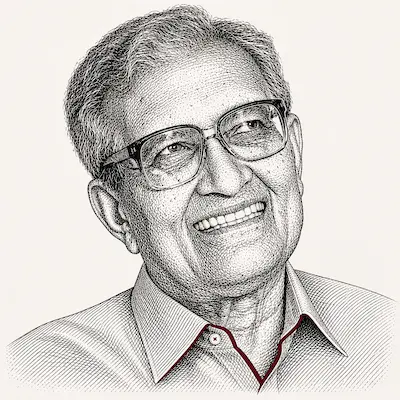
Markets need public action to function — taxation builds the capabilities that enable meaningful choice.
Hayek's knowledge problem cuts both ways. Markets aggregate information about existing preferences and technologies, but they systematically fail to generate the capabilities people need to participate meaningfully in market life. When half of India's children are malnourished, as they were when I began this work, market signals reflect the preferences of those with purchasing power — not the suppressed potential of those without basic capabilities. Progressive taxation that funds universal education, healthcare, and nutrition programs doesn't distort markets — it creates the human capabilities that make market participation genuinely free rather than formally free.
The question isn't whether individuals should choose their own capabilities, but whether they have genuine capability to choose. A child denied education has no real choice about their economic future. A woman denied healthcare has no real choice about family planning. Public action through progressive taxation creates the foundation of capability from which meaningful market choices become possible.
The convergence note
Where the council converges All members accept that innovation requires some form of security — whether through market mechanisms, social insurance, or hybrid arrangements that combine both.
Where it divides The council splits on whether high progressive taxation destroys or enables the conditions for innovation. Palme and Sen argue that public investment creates capabilities and trust that enhance dynamism. Thatcher and Hayek argue that taxation above moderate levels destroys entrepreneurial incentives. Keynes provides the middle position that timing and purpose matter more than absolute levels.
What only the policymaker can resolve The optimal tax level depends on specific institutional conditions — level of social trust, capital mobility, technological readiness, and democratic legitimacy — that cannot be determined through theory alone. The policymaker must judge which risks matter more: the capability deficits that result from undertaxation, or the incentive distortions that result from overtaxation.