Yes, but only if Europe commits real money and accepts unified command.
De Gaulle and Adenauer agree that Europe needs autonomous capacity; Thatcher and Schmidt demand it strengthen rather than duplicate NATO. Arendt warns that military integration without political integration creates violence without democratic accountability. Poland's 4% spending proves serious commitment is possible; Germany's 1.5% proves most states aren't serious yet.
The council splits on timing: whether Europe builds military capacity first or political unity first.
- 1Increase defense spending to 2.5% GDP minimum across all EU member states before establishing unified command structures.
- 2Create European Defense Community within NATO framework, maintaining interoperability with American forces while developing autonomous capacity.
- 3Establish binding sovereignty-sharing mechanisms for defense decisions before deploying any European army units.

Europe needs an army independent of American command.
The Atlantic alliance served us during the Cold War, but Europe cannot remain strategically dependent forever. In 1966 I withdrew France from NATO's integrated command because genuine sovereignty requires autonomous decision-making capacity. A European army would not weaken the West, it would strengthen it by creating a second pillar of democratic defense. The Americans will not defend European interests when they conflict with American ones. We learned this at Suez in 1956. European strategic autonomy is not anti-American; it is pro-European.
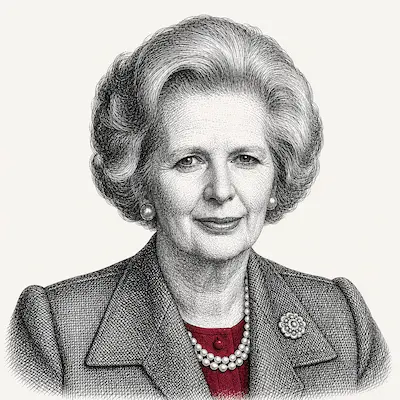
NATO works precisely because it pools strength without pooling sovereignty.
De Gaulle mistakes institutional structure for strategic effectiveness. NATO has kept the peace for seventy-five years because it combines American nuclear guarantee with European conventional forces under unified command. A European army would duplicate existing capabilities while creating dangerous command confusion. In the Falklands War, American intelligence and logistics were decisive, European allies offered only diplomatic support. Britain's special relationship with America strengthens Europe more than European defense integration ever could. We need interoperability with American forces, not independence from them.
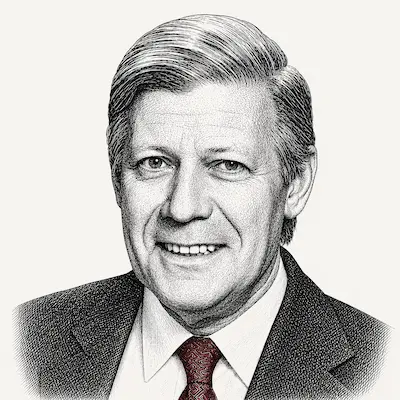
European defense requires European resources, not just European rhetoric.
Thatcher defends dependency as if it were strength. The Double-Track Decision taught me that Europeans must be capable partners, not grateful clients. In 1979 I convinced NATO to deploy Pershing missiles because Europe needed credible deterrence under European political control. A European army would work if, and only if, member states commit serious money and serious sovereignty. France spends 2.0%, Germany 1.5%, most others less. Adenauer built European integration through coal and steel because states will only pool sovereignty when they see concrete mutual benefit.
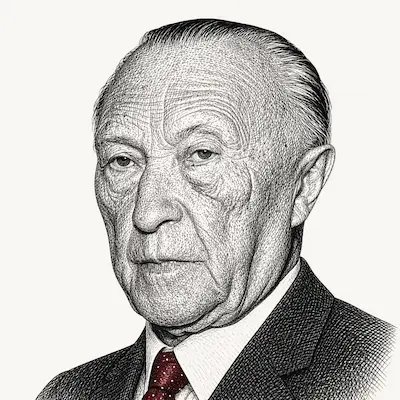
European integration strengthens the Atlantic alliance by creating an equal partner.
Schmidt underestimates what we achieved through patient institution-building. The Franco-German reconciliation that I built with de Gaulle proved that hereditary enemies can become permanent partners through shared institutions. A European army represents the same logic: transform competition into cooperation through binding commitments. But this must complement NATO, not replace it. In 1954 I supported the European Defence Community precisely because it would have strengthened Western defense. The project failed because France was not yet ready. Today's Europe is stronger, richer, and more unified.
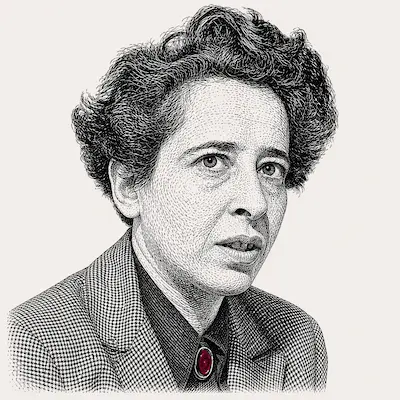
Violence without legitimate political authority is institutionally dangerous.
Adenauer's institutional optimism ignores the fundamental problem: a European army would be violence without power. Military force derives legitimacy from the political community that commands it. Europe has no such community, only a collection of nation-states that cooperate when convenient. The EU cannot make binding decisions about war and peace because European citizens have not constituted themselves as a European people. An army without a demos is not democratic defense but technocratic coercion. Until Europeans can answer "We, the people of Europe" with genuine conviction, European military integration will produce bureaucratic control over lethal force.
The convergence note
Where the council converges: European strategic capacity requires greater resources and political commitment than currently exist.
Where it divides: Whether European defense integration strengthens or weakens the Atlantic alliance; whether military integration can precede political integration.
For a policymaker to decide on: The specific institutional design and command structure for European defense cooperation within or alongside NATO.