What can I do as an ad man to destroy the Vaping culture among youngsters

Focus on understanding what vaping provides young people—social connection, stress relief, independence assertion—then systematically provide better alternatives while making the social environment less supportive of vaping behavior.
Roosevelt argues for respectful communication that offers practical alternatives rather than moral lectures, while Thatcher insists that clear consequences and social costs are essential for genuine behavioral change. Arendt identifies the deeper problem of thoughtless conformity enabled by social media environments, and Confucius emphasizes that lasting change requires patient work to transform the social models and moral education young people encounter daily.
The council divides on method: whether change happens through better messaging, stronger deterrence, institutional reform, or cultural transformation over time.
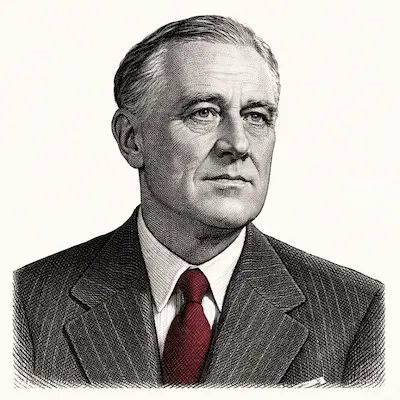
Mass communication requires acknowledging young people's intelligence while providing compelling alternatives.
When we launched the fireside chats in 1933, conventional political wisdom insisted that complex policy required careful technical explanation. I learned something different: effective public communication begins by respecting your audience's capacity to understand what matters to them personally. The mistake most anti-vaping campaigns make is the same mistake prohibition advocates made in the 1920s—they rely on moral lecturing rather than practical alternatives. My documented experience with radio taught me that reaching young Americans requires speaking to their intelligence, not down to their concerns. You cannot shame people out of behavior that serves a social or psychological function; you must provide them with better ways to meet those same needs.
The successful public health campaigns of my era—from promoting war bonds to encouraging polio research—worked because they gave people actionable steps toward a goal they could see advancing the common good. An anti-vaping campaign should operate similarly: acknowledge that vaping serves real functions for young people (stress relief, social connection, independence assertion), then demonstrate how alternative activities serve those same functions more effectively. The message must be positive and forward-looking, not prohibitive and backward-looking.
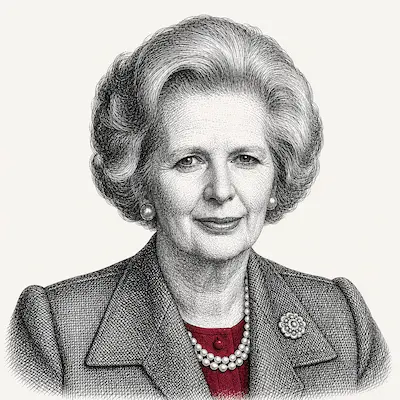
Individual responsibility is the foundation of genuine behavioral change—institutional solutions cannot substitute for personal choice.
Roosevelt misses the fundamental point: you cannot treat destructive behavior as if it were a reasonable response to social conditions. During my confrontation with the miners' strike in 1984–85, I learned that successful change requires clarity about what behavior is acceptable and what is not. The documented failure of harm reduction approaches to drug policy proves this: when you accommodate destructive behavior, you normalize and expand it. Young people are not victims of social circumstances—they are moral agents capable of choosing correctly when presented with clear standards and consequences.
The approach that worked with trade union militancy will work with vaping culture: make the costs of participation higher than the benefits. This means enforcement that actually deters, not education campaigns that treat vaping as a lifestyle choice rather than an objectively harmful activity. Parents, schools, and employers must create environments where vaping carries real social and economic costs. The successful anti-smoking campaigns of the 1970s and 1980s worked not because they provided "alternatives" but because they made smoking socially unacceptable and economically expensive.

Anti-vaping efforts must address the conditions that make thoughtless conformity possible, not merely individual choice.
Both Roosevelt and Thatcher treat this as a problem of changing individual minds, but my work on how ordinary people become complicit in harmful systems suggests the issue is structural. What we observe with youth vaping culture is what I documented in studying totalitarian movements: the phenomenon of thoughtlessness—people adopting behaviors not through careful consideration but through social conformity and the suspension of independent judgment. The question is not why young people choose to vape, but why they cease to think about the choice at all.
The documented effectiveness of social media in normalizing vaping demonstrates what I called "the banality of evil"—not evil in the dramatic sense, but the systematic erosion of the capacity for independent moral and practical judgment. Young people vape because everyone around them vapes, because influencers they follow vape, because the social environment has made it the unreflective default. The solution cannot be more persuasive messaging competing for the same thoughtless attention—it must be the reconstruction of social spaces where genuine deliberation about choices becomes possible again.

Lasting behavioral change requires changing the cultural environment and social models young people encounter.
The earlier speakers focus on the symptoms—individual choices and social conformity—but the root lies in the failure of moral education and social modeling. When I observed that "the superior man thinks of virtue, the common man thinks of profit," I was identifying what we see in vaping culture: young people have been surrounded by models that prioritize immediate gratification and social validation over long-term cultivation of health and character.
The solution is not prohibition or counter-messaging but the patient work of changing the social models young people encounter daily. Parents, teachers, community leaders, and peer influencers who demonstrate that strength, confidence, and social connection come through disciplined self-cultivation rather than through conforming to immediately available pleasures. This requires what I called "rectification of names"—calling vaping what it actually is (addiction and dependency) rather than accepting the euphemisms (lifestyle choice, harm reduction, personal freedom) that obscure its reality. Most importantly, it requires communities that consistently reward the long-term thinking and genuine independence that makes harmful conformity unnecessary.
The change will not happen through campaigns but through the accumulated daily example of adults who model better ways of achieving what young people are actually seeking: belonging, confidence, and social recognition.
The convergence note
Where the council converges All members agree that effective anti-vaping work requires understanding what social and psychological functions vaping serves for young people and that purely prohibitive approaches will fail without providing better alternatives.
Where it divides Roosevelt emphasizes positive communication and practical alternatives; Thatcher insists on clear consequences and social costs; Arendt focuses on reconstructing conditions for independent thought; Confucius prioritizes long-term moral education and social modeling. The fundamental disagreement is whether change happens through better messaging, stronger deterrence, institutional reform, or cultural transformation.
What only the policymaker can resolve The specific combination of communication strategies, enforcement mechanisms, social interventions, and long-term educational investments that will work within their particular institutional capacity and cultural context—balancing immediate harm reduction against longer-term behavioral and cultural change.